
Introduction
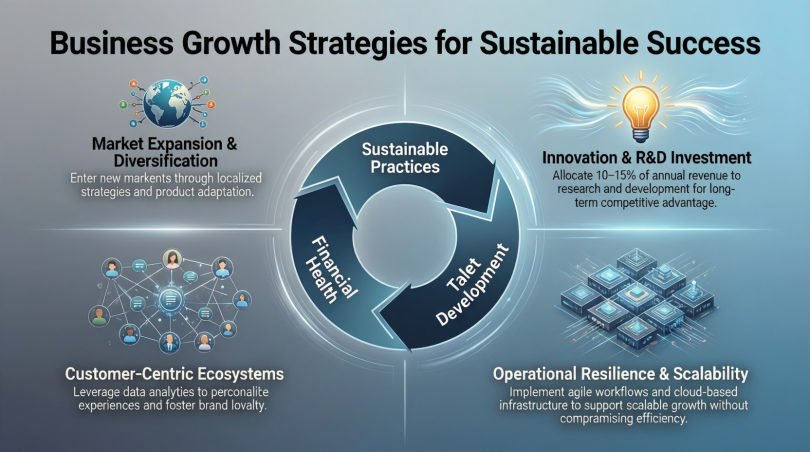
Business growth strategies are essential for any company that wants to survive, compete, and succeed in today’s fast-changing market. Whether you run a small startup or a growing company, having clear business growth strategies helps you move forward with confidence and direction.
In this guide, you will learn what business growth strategies are, why they matter, and how to apply them step by step. The content is written in simple English and designed for beginners and intermediate readers who want practical and realistic growth ideas.
What is Business Growth Strategies?
Business growth strategies refer to planned actions and methods that companies use to expand their operations, increase revenue, and improve market presence. These strategies focus on how a business can grow in a controlled and sustainable way.
Growth can happen in many forms. It may include gaining more customers, launching new products, entering new markets, or improving internal processes. The right strategy depends on business goals, resources, and market conditions.
Why is Business Growth Strategies Important?
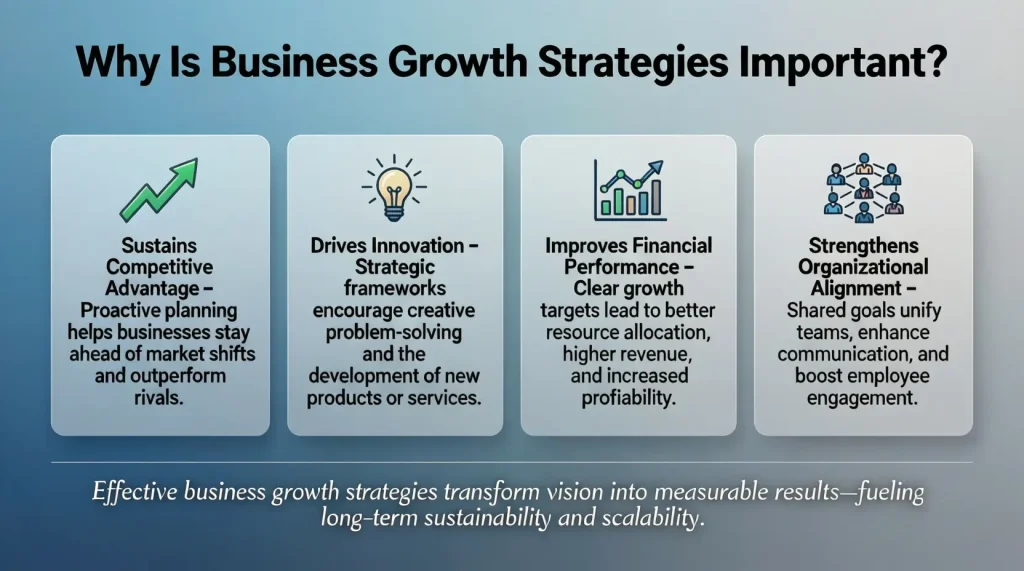
Business growth strategies are important because they give direction to your efforts. Without a clear plan, growth becomes random and risky. A strategy helps you decide where to invest time, money, and energy.
Moreover, growth strategies help businesses stay competitive. Markets change, customer needs evolve, and competitors improve. A strong growth plan allows a business to adapt, stay relevant, and build long-term stability.
Detailed Step-by-Step Guide
Step 1: Analyze Your Current Business Position
Before choosing any growth strategy, understand where your business stands today. Review your sales, profits, customer base, and market position.
Also, analyze strengths, weaknesses, opportunities, and threats. This clarity helps you choose realistic and effective growth actions.
Step 2: Define Clear Growth Goals
Set specific and measurable goals. For example, aim to increase revenue by a certain percentage or expand into a new market within a defined period.
Clear goals keep your team focused and make it easier to track progress and success.
Step 3: Understand Your Target Market
Knowing your customers is critical. Study their needs, preferences, and buying behavior. This knowledge allows you to create better products and services.
When you understand your audience, your business growth strategies become more customer-focused and effective.
Step 4: Improve Your Products or Services
Product improvement is a powerful growth method. Enhance quality, add features, or improve customer experience.
Happy customers often become repeat buyers and brand promoters, supporting steady growth.
Step 5: Expand Your Market Reach
Market expansion involves reaching new customer segments or geographic areas. This can be done through new locations, online platforms, or partnerships.
However, expansion should be planned carefully to avoid overextending resources.
Step 6: Strengthen Marketing and Sales Efforts
Effective marketing supports growth. Focus on clear messaging, consistent branding, and customer engagement.
Sales teams should be trained to understand customer needs and offer value-based solutions.
Step 7: Build a Strong Team and Systems
Growth requires capable people and efficient systems. Invest in employee training and clear processes.
Strong internal operations reduce errors, save time, and support smooth scaling.
Step 8: Monitor Performance and Adjust
Track key performance indicators regularly. Analyze what works and what does not.
Flexibility is important. Adjust strategies based on data, feedback, and market changes.
Benefits of Business Growth Strategies
- Clear direction and long-term vision
- Increased revenue and profitability
- Better customer retention and loyalty
- Stronger competitive advantage
- Improved operational efficiency
- Enhanced brand recognition
- Sustainable and controlled expansion
Disadvantages / Risks
- High costs and resource requirements
- Risk of poor execution
- Possible cash flow issues
- Increased operational complexity
- Market uncertainty and competition
- Employee burnout during rapid growth
Common Mistakes to Avoid
Many businesses fail to grow because they rush without planning. One common mistake is trying too many strategies at once, which leads to confusion and wasted resources.
Another mistake is ignoring customer feedback. Growth should always align with customer needs. Lastly, failing to track performance can cause businesses to repeat ineffective actions.
FAQs
What are the most effective business growth strategies?
The most effective business growth strategies depend on your industry and goals. Common approaches include market expansion, product improvement, customer retention, and partnerships.
How long does it take to see results from growth strategies?
Results vary based on strategy type and execution. Some marketing efforts show quick results, while others like brand building take longer.
Can small businesses use business growth strategies?
Yes, small businesses benefit greatly from growth strategies. Simple planning and focused actions can lead to steady and manageable growth.
What role does customer feedback play in growth?
Customer feedback helps improve products, services, and experiences. It guides better decisions and reduces the risk of failure.
Are business growth strategies risky?
All growth involves some risk. However, careful planning, research, and monitoring can reduce potential problems.
How often should growth strategies be reviewed?
Growth strategies should be reviewed regularly, ideally quarterly or annually, to ensure alignment with goals and market conditions.
Expert Tips & Bonus Points
Focus on sustainable growth instead of quick wins. Build strong customer relationships and invest in quality.
Also, stay flexible and open to change. Markets evolve, and successful businesses adapt continuously.
Conclusion
Business growth strategies provide a clear roadmap for companies that want to expand responsibly and successfully. By understanding your market, setting clear goals, and improving operations, growth becomes achievable and manageable.
In the long run, consistent planning, customer focus, and performance tracking make growth sustainable. With the right mindset and strategy, any business can move forward with confidence and stability.