
Introduction
Technology is changing the way people live, work, and communicate. Every year, new inventions, systems, and digital tools appear that make life faster and more connected. For beginners and intermediate users, understanding future technology trends can feel confusing, especially when information is technical and complex.
Learning about future technology trends helps people prepare for upcoming changes. It supports better career planning, smarter business decisions, and safer digital habits. This guide explains future technology trends in simple English so that anyone can understand and benefit from them.
Modern society depends heavily on digital systems. From smartphones to smart homes, technology is everywhere. By following future technology trends, people can stay updated, confident, and ready for new opportunities in the digital world.
This article explains what future technology trends are, why they matter, and how you can use them wisely in daily life and professional growth.
What Is Future Technology Trends?
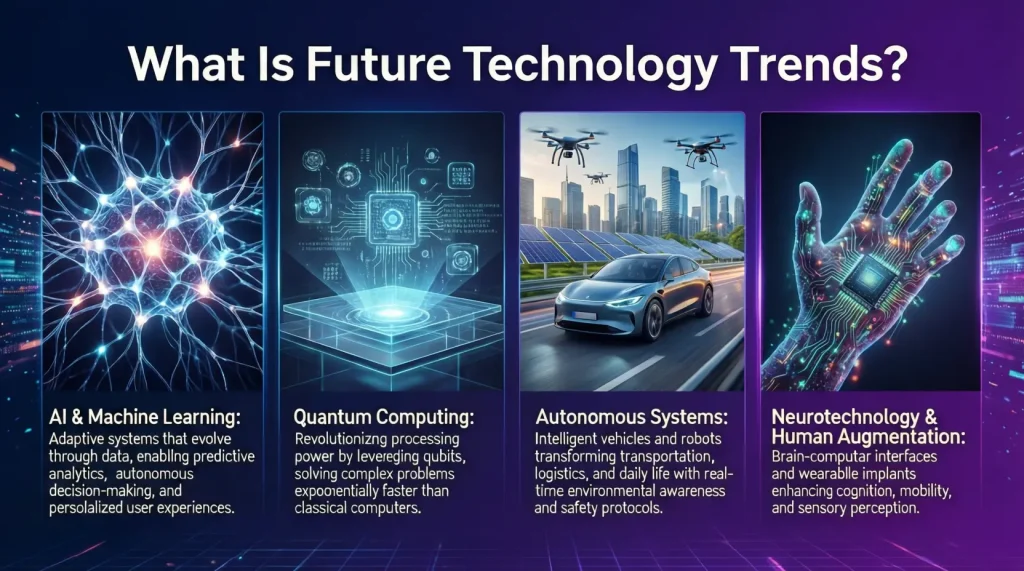
Future technology trends refer to new and emerging technological developments that are expected to shape the world in coming years. These trends include advancements in artificial intelligence, automation, robotics, virtual reality, blockchain, smart devices, and renewable energy systems.
They show the direction in which technology is moving. Instead of focusing only on current tools, future technology trends look ahead and predict what will become common in the near future.
For example, self-driving cars, smart cities, and voice-controlled systems were once ideas but are now becoming reality. These are results of long-term technological trends.
Understanding these trends helps people prepare for changes before they happen.
Why Is Future Technology Trends Important?
Future technology trends are important because they influence almost every industry. Education, healthcare, business, transportation, and entertainment all depend on modern technology.
By knowing upcoming trends, individuals can learn useful skills early. This increases job opportunities and professional stability.
Businesses also rely on trends to stay competitive. Companies that ignore new technology often lose customers and market value.
For society, technology trends improve efficiency, safety, and quality of life. Smart systems reduce waste, save time, and support sustainable development.
In short, future technology trends guide progress and innovation.
Detailed Step-by-Step Guide to Understanding Future Technology Trends
Step 1: Learn Basic Technology Concepts
Start by understanding simple digital terms such as cloud computing, automation, data security, and digital platforms.
Basic knowledge makes advanced topics easier to understand. You do not need technical degrees, only curiosity and practice.
Clear foundations improve learning speed.
Step 2: Follow Technology News Regularly
Read technology updates weekly or daily. Focus on reliable platforms that explain topics clearly.
Consistency helps you recognize patterns and changes over time.
Regular reading improves awareness.
Step 3: Identify Major Technology Areas
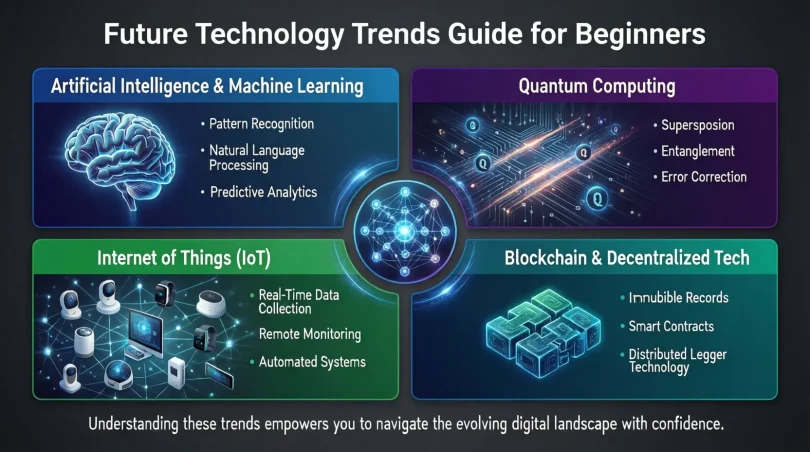
Future technology trends are usually connected to major fields such as:
- Artificial intelligence
- Internet of Things
- Robotics
- Cybersecurity
- Green technology
Understanding these areas helps organize information.
Step 4: Study Real-Life Applications
Do not focus only on theory. Look at how new technology is used in daily life.
For example, smart assistants, online learning platforms, and digital payments are practical examples.
Applications make trends meaningful.
Step 5: Observe Industry Changes
Different industries adopt technology differently. Education uses digital classrooms, while healthcare uses telemedicine.
Observing industries shows how trends affect real systems.
This improves practical understanding.
Step 6: Learn Digital Skills
Learning basic digital skills increases adaptability. Skills such as data handling, online communication, and content creation are useful.
These skills match future job requirements.
Learning supports long-term growth.
Step 7: Join Technology Communities
Online forums, groups, and discussions help share knowledge.
People exchange ideas, experiences, and advice.
Community learning speeds up development.
Step 8: Analyze Opportunities and Risks
Every technology has advantages and disadvantages. Learn both sides.
For example, automation saves time but may reduce some jobs.
Balanced thinking supports better decisions.
Step 9: Experiment with New Tools
Try new applications, devices, and platforms.
Hands-on experience improves confidence and understanding.
Practice strengthens skills.
Step 10: Review and Update Knowledge
Technology changes quickly. Review your knowledge regularly.
Update learning materials and skills.
Continuous learning ensures relevance.
Benefits of Future Technology Trends
- Improves career opportunities
- Supports business growth
- Enhances daily convenience
- Encourages innovation
- Saves time and resources
- Promotes global connectivity
Disadvantages and Risks
- Job displacement through automation
- Data privacy concerns
- Cybersecurity threats
- Digital addiction
- High implementation costs
Common Mistakes to Avoid
Many people ignore technology until it becomes unavoidable. Late adaptation reduces opportunities.
Another mistake is blindly following trends without understanding them.
Some users depend too much on technology and lose critical thinking skills.
Ignoring security practices increases online risks.
Avoid focusing only on benefits and forgetting limitations.
FAQs
What are future technology trends?
They are upcoming technological developments that will shape society and industries.
Why should beginners learn about technology trends?
It helps in career planning, skill development, and smart decision making.
Are technology trends difficult to understand?
No, with simple learning and practice, anyone can understand them.
Do future trends affect small businesses?
Yes, digital tools improve productivity and customer reach.
How often should I update my knowledge?
At least every three to six months.
Can technology trends change suddenly?
Yes, market demand and innovation can cause rapid changes.
Expert Tips and Bonus Points
Focus on long-term value instead of short-term excitement.
Learn continuously, even during busy periods.
Balance technology use with personal well-being.
Develop problem-solving skills alongside technical skills.
Build a digital portfolio to show your abilities.
Stay open to learning from different sources.
Conclusion
Future technology trends shape how people live, work, and communicate. Understanding these trends helps individuals and businesses prepare for change and growth. With proper learning and awareness, technology becomes an opportunity rather than a challenge.
By following simple steps, avoiding common mistakes, and applying expert advice, beginners and intermediate learners can stay confident in the digital age. Staying informed today means building a better future tomorrow.