
Introduction
International trade agreements play a crucial role in today’s global economy. These agreements govern how countries exchange goods, services, and investments, ensuring fair competition and economic growth. Understanding international trade agreements is vital for businesses, investors, and professionals looking to explore global markets.
For beginners, learning about international trade agreements helps in understanding how countries cooperate, reduce trade barriers, and create economic opportunities. For intermediate learners and professionals, this knowledge supports strategic decisions, investment planning, and global business expansion. Following trade agreements helps nations and companies achieve sustainable growth while minimizing risks.
What Is an International Trade Agreement?
An international trade agreement is a formal arrangement between two or more countries to regulate trade. These agreements define rules for importing and exporting goods, services, and investments. They aim to reduce barriers such as tariffs, quotas, and restrictive regulations.
There are several types of trade agreements:
- Bilateral Agreements – Between two countries, e.g., US-Mexico-Canada Agreement (USMCA)
- Multilateral Agreements – Involving multiple countries, e.g., World Trade Organization (WTO) agreements
- Regional Trade Agreements – Among countries in a region, e.g., European Union (EU) trade deals
For example, a bilateral trade agreement might reduce tariffs on electronics exported from one country to another, making products cheaper and more competitive in the target market.
Why Are International Trade Agreements Important?
International trade agreements are essential for several reasons:
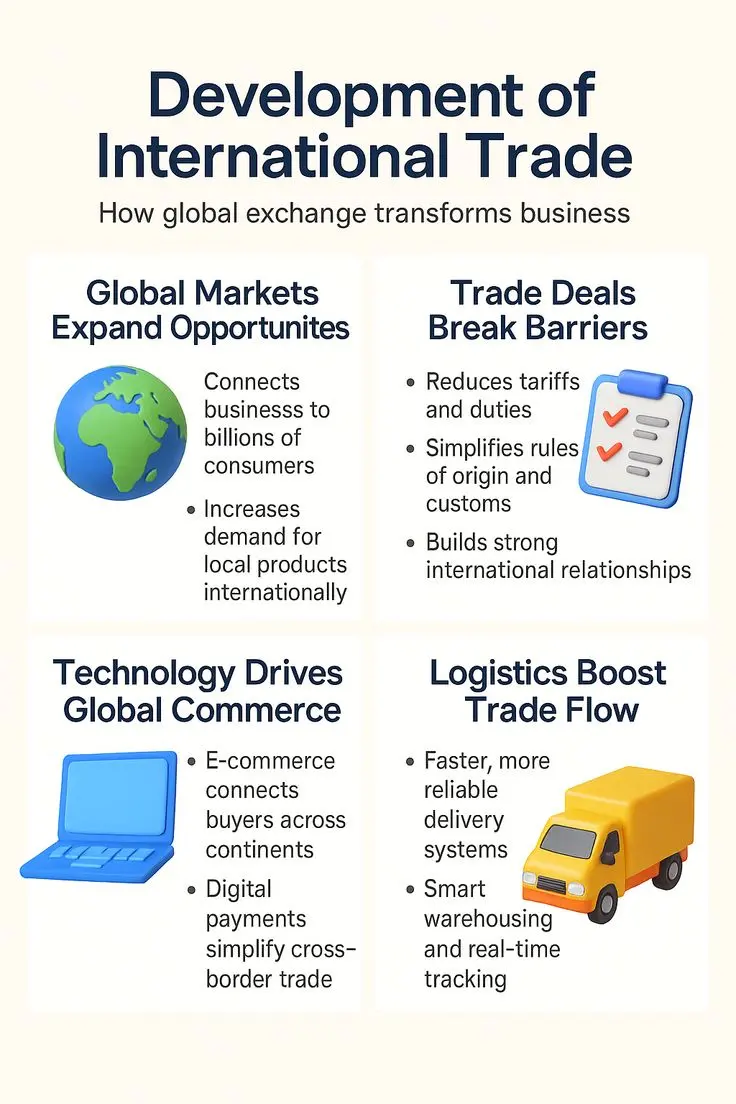
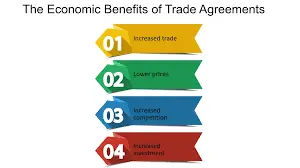
- Promote Economic Growth – They increase trade volume, create jobs, and boost GDP.
- Reduce Trade Barriers – Agreements simplify customs procedures and remove tariffs, promoting fair competition.
- Encourage Investment – Investors gain confidence when clear trade rules exist between countries.
- Strengthen Diplomatic Relations – Trade cooperation fosters peaceful economic and political relationships.
- Improve Consumer Access – Consumers benefit from a wider range of goods at lower prices.
For businesses, these agreements provide a framework to expand operations internationally and compete in foreign markets effectively.
Detailed Step-by-Step Guide to Understanding International Trade Agreements
Step 1: Identify the Type of Agreement
Determine whether the agreement is bilateral, multilateral, or regional. Understanding the type helps assess the scope and impact.
Step 2: Study the Terms and Provisions
Examine key elements:
- Tariff reductions
- Import/export restrictions
- Rules of origin
- Intellectual property protections
- Investment regulations
Knowing these details helps businesses and investors understand obligations and benefits.
Step 3: Understand Participating Countries
Identify the member countries and their trade relationships. Consider:
- Economic size and market potential
- Political stability
- Existing trade relations
This step highlights which markets offer the best opportunities.
Step 4: Analyze Trade Impacts
Examine how the agreement affects:
- Domestic industries
- Export and import businesses
- Employment and job creation
- Consumer prices
For example, lowering tariffs on agricultural products may benefit farmers but challenge local manufacturers competing with imports.
Step 5: Evaluate Compliance and Legal Requirements
Ensure understanding of legal and regulatory obligations:
- Customs documentation
- Tax compliance
- Product standards and certifications
Non-compliance may result in fines, shipment delays, or legal penalties.
Step 6: Identify Opportunities for Business Expansion
Trade agreements create new markets. Companies can:
- Export products more competitively
- Partner with foreign firms
- Access investment incentives
For instance, a technology company may export software to multiple countries under a multilateral trade agreement without facing heavy tariffs.
Step 7: Assess Risks
Identify potential challenges, including:
- Market competition
- Political instability in partner countries
- Currency fluctuations
- Regulatory changes
Risk assessment helps in developing mitigation strategies.
Step 8: Plan Strategy Accordingly
Use insights to create actionable strategies:
- Market entry plans
- Pricing strategies
- Supply chain optimization
- Risk management
Effective strategies ensure maximum benefits from trade agreements.
Step 9: Monitor Changes
Trade agreements may be updated or renegotiated. Continuous monitoring ensures businesses remain compliant and competitive.
Step 10: Evaluate Performance
Track outcomes, including:
- Export growth
- Market share
- Revenue increase
- Cost reduction
Evaluation helps refine strategies for future agreements.
Benefits of International Trade Agreements
- Boosts global trade and economic growth
- Reduces tariffs and import/export costs
- Encourages foreign direct investment
- Promotes innovation and technology transfer
- Creates employment opportunities
- Strengthens diplomatic relations
- Provides access to new markets and consumers
Disadvantages / Risks
- Domestic industries may face competition from imports
- Political disagreements may disrupt trade
- Currency fluctuations impact profitability
- Unequal benefits between countries
- Regulatory compliance can be complex and costly
- Dependency on foreign markets increases economic risk
- Environmental or labor concerns may arise
Common Mistakes to Avoid
- Ignoring local market conditions before exporting
- Assuming all trade agreements are equally beneficial
- Neglecting legal and regulatory compliance
- Underestimating currency and political risks
- Overlooking cultural and consumer preferences
- Failing to monitor changes in agreements
- Relying solely on one trade partner or agreement
Avoiding these mistakes ensures businesses maximize the benefits of trade agreements.
FAQs
1. What is an international trade agreement?
It is a formal arrangement between countries to regulate trade, reduce tariffs, and promote economic cooperation.
2. How do trade agreements benefit businesses?
They create new markets, reduce costs, and provide legal frameworks for safe investment.
3. Are all countries affected equally?
No, benefits may vary depending on economic size, industry competitiveness, and negotiation terms.
4. What is the difference between bilateral and multilateral agreements?
Bilateral involves two countries, while multilateral involves multiple countries or regions.
5. How can small businesses take advantage?
By exporting products, forming partnerships, and understanding market opportunities under trade agreements.
6. Do international trade agreements affect consumers?
Yes, consumers gain access to diverse products at competitive prices, often with improved quality.
7. Can trade agreements fail?
Yes, political conflicts, economic crises, or unfair terms can hinder the effectiveness of agreements.
Expert Tips & Bonus Points
- Always analyze market trends before entering a trade agreement
- Monitor updates and renegotiations regularly
- Diversify trade partnerships to reduce dependency
- Understand cultural and legal nuances of partner countries
- Leverage technology to optimize supply chains and logistics
- Keep track of tariffs, quotas, and incentives to stay competitive
- Use industry reports and market research to make informed decisions
- Invest in compliance training to reduce regulatory risks
- Plan for currency and economic fluctuations
- Collaborate with local experts to maximize opportunities
Conclusion
International trade agreements are vital for global commerce, providing frameworks for countries and businesses to collaborate, reduce barriers, and expand opportunities. They foster economic growth, increase trade volumes, and create employment while promoting cooperation among nations.
For beginners and intermediate learners, understanding these agreements provides insights into global markets, business strategies, and economic policies. Businesses can benefit significantly by studying trade agreements, identifying opportunities, managing risks, and developing informed strategies to compete successfully in the international arena.