
Introduction
The technology sector is one of the fastest-growing industries in the world. Understanding tech market analysis helps businesses, investors, and enthusiasts make informed decisions. This type of analysis shows current trends, opportunities, and potential risks in areas like software, hardware, AI, cloud computing, and consumer electronics.
Tech market analysis also benefits beginners and intermediate learners. It provides insights into emerging technologies, helps identify profitable ventures, and guides strategic decisions. By understanding market trends, anyone can better anticipate changes, optimize resources, and maximize growth in this dynamic industry.
What Is Tech Market Analysis?
Tech market analysis is the process of evaluating the technology sector to understand its trends, growth potential, and competitive landscape. It involves studying companies, products, consumer behavior, and emerging innovations.
This analysis can focus on specific areas such as:
- Consumer electronics
- Software solutions
- Artificial intelligence
- Cloud computing
- Internet of Things (IoT)
For example, analyzing smartphone sales trends or AI adoption rates helps businesses predict demand, plan marketing strategies, and make investment decisions.
Why Is Tech Market Analysis Important?
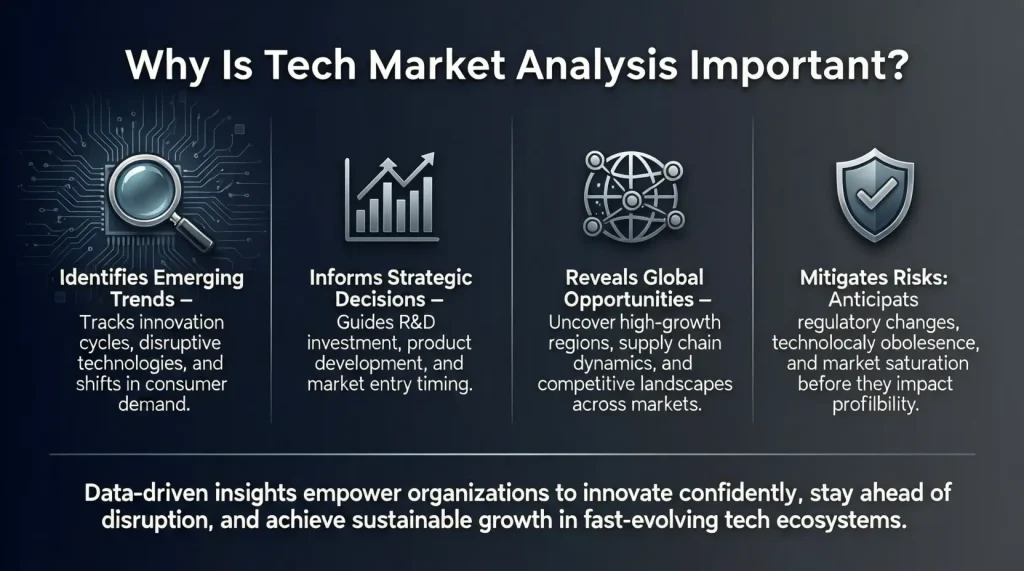
Tech market analysis is crucial for several reasons:
- Informed Decision-Making – Companies and investors can make data-driven decisions based on market insights.
- Identifying Opportunities – Emerging markets and trending technologies can be discovered through analysis.
- Risk Management – Understanding challenges and competitor strategies reduces business risks.
- Resource Optimization – Helps allocate budgets and resources effectively.
- Strategic Planning – Supports long-term growth and competitive advantage.
For beginners, tech market analysis helps in learning about industry trends, guiding career paths, and identifying skills in demand.
Detailed Step-by-Step Guide to Conducting Tech Market Analysis
Step 1: Define Your Objective
Start by identifying the purpose of your analysis. Are you:
- Evaluating investment opportunities?
- Researching competitors?
- Understanding consumer behavior?
Clear objectives provide direction and focus.
Step 2: Study the Market Landscape
Research overall market size, growth rates, and key segments. Consider:
- Geographic trends
- Industry sectors
- Technology adoption rates
This helps you identify which areas are growing fastest.
Step 3: Analyze Competitors
Study competitors’ products, pricing, marketing strategies, and customer reviews. Ask:
- What are their strengths and weaknesses?
- What innovations are they introducing?
- How do they engage customers?
Competitor analysis reveals gaps and opportunities.
Step 4: Identify Target Customers
Understand your audience’s needs, preferences, and behaviors. Collect data on:
- Age, location, and occupation
- Technology usage habits
- Purchase behavior
- Feedback on existing products
Customer insights improve product design and marketing strategies.
Step 5: Monitor Trends and Innovations
Stay updated with emerging technologies and industry trends. Key areas include:
- Artificial intelligence and machine learning
- Cloud computing and SaaS
- IoT and connected devices
- Cybersecurity solutions
- AR/VR applications
Tracking innovations ensures your business or strategy remains relevant.
Step 6: Collect and Analyze Data
Use quantitative and qualitative data from:
- Market reports
- Surveys and interviews
- Sales data
- Online reviews
Data-driven insights improve accuracy and reliability.
Step 7: Evaluate Strengths, Weaknesses, Opportunities, and Threats (SWOT)
SWOT analysis helps in understanding internal and external factors:
- Strengths – What your company or product does well
- Weaknesses – Areas for improvement
- Opportunities – New markets or trends to explore
- Threats – Competitors, regulations, or market shifts
Step 8: Forecast Future Trends
Use historical data and trend analysis to predict future developments. Forecasting helps in planning product launches, investments, and marketing strategies.
Step 9: Develop Actionable Strategies
Based on your analysis, create strategies for:
- Product development
- Marketing campaigns
- Investment decisions
- Customer engagement
Actionable strategies turn insights into real-world results.
Step 10: Review and Update Regularly
Tech markets change rapidly. Regular reviews ensure your analysis remains accurate and actionable.
Benefits of Tech Market Analysis
- Improved decision-making
- Identifying profitable market segments
- Reduced business risks
- Optimized resource allocation
- Competitive advantage
- Enhanced understanding of consumer behavior
- Better forecasting and planning
Disadvantages / Risks
- Data collection can be time-consuming
- High cost of detailed market reports
- Misinterpretation of data can lead to wrong decisions
- Rapid technology changes may make analysis outdated quickly
- Overreliance on analysis may limit creativity
- Some trends may be unpredictable
- Market saturation can reduce opportunities
Common Mistakes to Avoid
- Ignoring emerging competitors
- Focusing only on past data
- Neglecting customer feedback
- Using unreliable sources
- Overlooking global market trends
- Failing to review strategies regularly
- Underestimating technology adoption rates
Avoiding these mistakes ensures a more accurate and effective market analysis.
FAQs
1. What is tech market analysis?
Tech market analysis studies technology trends, industry growth, competitors, and consumer behavior to guide decisions.
2. Why is tech market analysis important for beginners?
It helps beginners understand the industry, identify learning opportunities, and prepare for careers or investments.
3. How often should market analysis be conducted?
Regularly, ideally every 6-12 months, because the tech market changes rapidly.
4. What tools are used for tech market analysis?
Tools include market research reports, surveys, analytics software, financial reports, and trend analysis platforms.
5. Can small businesses benefit from tech market analysis?
Yes, even small businesses can identify trends, competitors, and customer needs to improve their strategy.
6. What are the risks of poor market analysis?
Poor analysis can lead to wrong investment decisions, product failures, lost opportunities, and wasted resources.
7. How can beginners start learning tech market analysis?
Start by reading industry reports, following tech news, learning basic data analysis, and observing trends in consumer electronics and software.
Expert Tips & Bonus Points
- Always cross-check data from multiple sources
- Focus on emerging technologies and future trends
- Learn to use analytical tools for data visualization
- Consider global markets, not just local trends
- Keep an eye on competitors’ innovations
- Balance quantitative data with qualitative insights
- Regularly review and update your analysis
- Understand consumer needs deeply
- Forecast with multiple scenarios for better planning
- Combine analysis with practical business strategies
Conclusion
Tech market analysis is essential for anyone interested in technology, business, or investment. It provides insights into trends, opportunities, risks, and competitive dynamics. With proper research, data collection, and analysis, individuals and businesses can make informed decisions, plan strategically, and maximize growth potential.
By understanding tech market dynamics, beginners and intermediate learners can stay ahead in the fast-changing technology world. Regular updates, careful planning, and actionable strategies ensure that tech market analysis remains a powerful tool for success.